COMING FALL 2026 THE FUTURE OF PET WASTE STATIONS Now Accepting Pre-Order and Distributor Inquiries

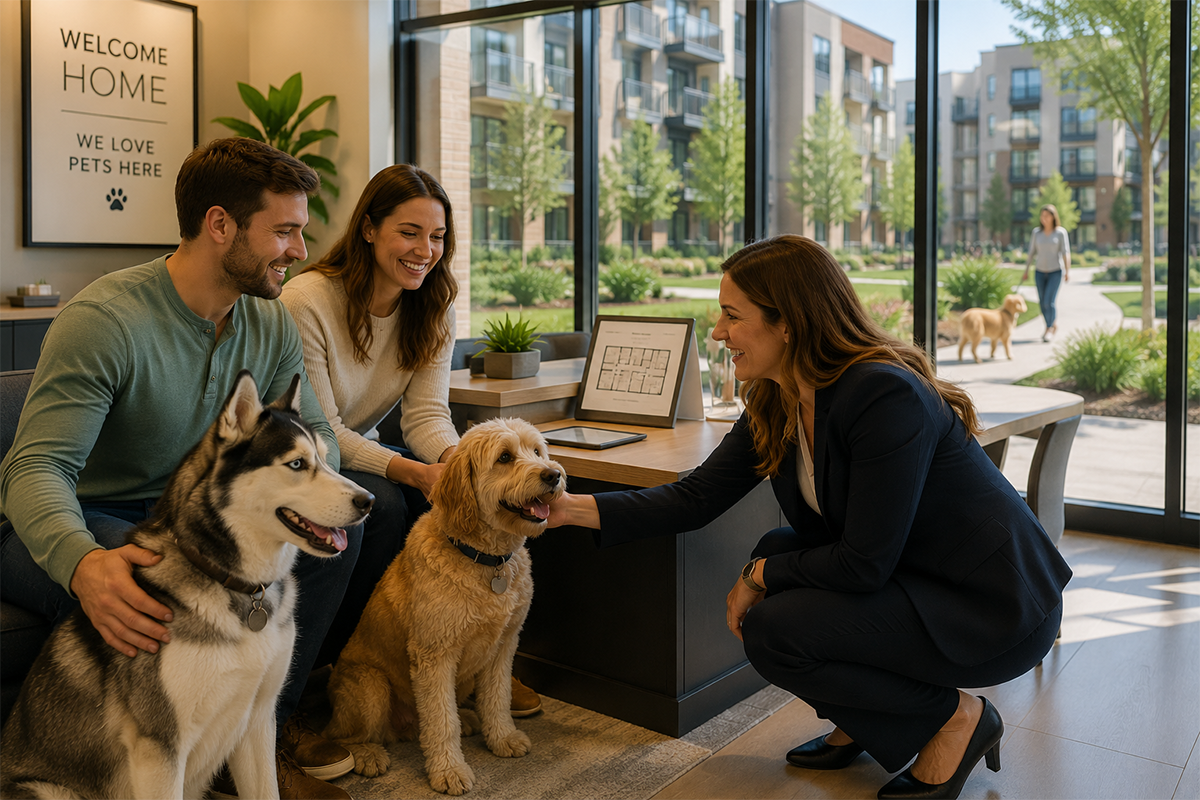

For today’s residents, being pet friendly increasingly means more than simply allowing pets.
By Avi Kosch
Founder, PooStation
A NEXGEN DNA, Inc. Company
There was a time when a residential community could describe itself as pet friendly for one simple reason: the lease allowed a dog. There might have been a monthly fee, restrictions on size or breed, or designated areas where pets were permitted, but the basic promise was straightforward. Pets were allowed. For many residents, that alone represented progress.
Today, that definition is becoming increasingly difficult to defend.
The relationship between Americans and their pets has changed significantly, and housing is changing with it. Pew Research Center found that roughly half of American pet owners consider their pets as much a part of their family as a human member. That relationship inevitably influences decisions extending far beyond the walls of a home. Where people choose to live, how they spend their free time, where they walk, which outdoor spaces they use, and even how they interact with their neighbors can all be affected by the animals sharing their lives.
The housing data makes that evolution particularly difficult to ignore. Zillow analyzed more than 11 million rental listings and found that pet-friendly properties received 9 percent more views, 12 percent more saves, and 11 percent more shares than listings that did not welcome pets. Pet-friendly rentals also typically leased eight days faster. Apartments.com found another revealing measure of the same shift: 38 percent of renters surveyed considered a no-pets policy an immediate deal-breaker.
Those numbers suggest that pet friendliness has moved well beyond a courtesy offered to a relatively small group of residents. For a substantial portion of the housing market, pets are part of the decision about where home will be.
Perhaps the more interesting question, however, is what pet friendly actually means today.
For years, the phrase primarily described permission. Your dog was allowed to live with you. Then communities began adding dog parks, creating dedicated places for dogs to exercise and residents to socialize. Pet washing stations followed. Newer developments increasingly incorporated dog runs, landscaped green spaces, walking trails, relief areas, water stations, and other pet-oriented features into their amenity packages. What began as permission gradually became accommodation, and accommodation is increasingly becoming part of community design.
That progression has helped introduce another term into the housing conversation: pet inclusive. Research surrounding pet-inclusive housing has examined the difference between merely allowing pets and creating housing where living with a pet is realistically supported. Michelson Found Animals’ Pet-Inclusive Housing Initiative, along with academic researchers studying renters with pets, has explored how restrictions, fees, housing availability, and other barriers influence where pet owners can live.
The distinction is worth considering beyond housing policies alone. A community can technically be pet friendly while making everyday life with a dog surprisingly inconvenient. A truly pet-inclusive environment asks a broader question: how does living here actually work for residents who share their homes with pets?
That question takes the conversation outside the front door.
Dogs change the way many residents experience their communities. They create morning walks before work and evening walks after dinner. They bring people onto sidewalks, trails, lawns, and common areas several times every day. They establish familiar routes through a property and reasons to stop along the way. A resident who might otherwise move between a garage, home, and automobile can become one of the most frequent users of a community’s outdoor environment simply because a dog needs to be walked.
Research into dog walking and the built environment supports that connection. Studies have found that a substantial amount of dog walking occurs within residential neighborhoods and that access to suitable walking environments can influence walking behavior. The implication is important: pet ownership does not exist solely inside individual homes or apartments. It affects how shared residential environments are used.
There is also a social dimension. Research conducted across multiple cities has associated pet ownership with greater social capital and neighborhood interaction. The mechanism is familiar to almost anyone who regularly walks a dog. Dogs create introductions. Two people who might otherwise pass silently on a sidewalk stop because their dogs meet first. Residents begin recognizing one another. Familiar dogs become familiar owners, and repeated encounters gradually create relationships that may never have occurred without those daily walks.
More recent research examining pet ownership and neighborhood attachment adds another dimension to that idea, suggesting relationships between pets, social connection, and the way people experience the neighborhoods around them. None of this means a dog park automatically creates community or that pet ownership alone determines resident satisfaction. It does suggest that pets increasingly participate in the way residents use and connect with the places they call home.
Once that is recognized, pet amenities begin looking less like isolated extras on an amenity checklist and more like pieces of community infrastructure.
A dog park, for example, is not valuable simply because a developer can place it on a list beside the pool and fitness center. Its location, drainage, shade, seating, cleanliness, accessibility, and connection to surrounding walking routes determine how residents actually experience it. The same principle applies to pet washing areas, green spaces, walking trails, relief areas, lighting, and commercial pet waste stations. An amenity can technically exist without necessarily making everyday life easier.
That may represent the next evolution of the pet-friendly community. For years, residential properties have competed by adding more amenities. The next step may be less about the number of pet amenities a community can advertise and more about how thoughtfully those amenities work together.
A walking trail connects residents to green space. Green space may connect to a dog park. Lighting extends the hours those areas can comfortably be used. Seating makes them more welcoming. Convenient pet waste infrastructure helps residents clean up after their dogs and helps maintenance teams protect the shared environment. Together, those individual pieces form something much more meaningful than an amenity list: they create an ecosystem designed around how people and pets actually live.
Commercial pet waste stations are an especially revealing example of this evolution. Their role is straightforward but important. They support residents who are already walking their dogs, provide bags when cleanup is required, offer a convenient place for disposal, and help maintenance teams manage shared outdoor spaces. Yet while dog parks, walking trails, clubhouses, landscaping, lighting, and other community amenities have continued evolving, commercial pet waste infrastructure has historically received considerably less attention.
That disconnect became one of the ideas behind the development of PooStation.
PooStation grew from the belief that if the role of pets within communities has evolved, the infrastructure supporting them should evolve as well. Rather than treating a commercial pet waste station as little more than a bag dispenser, receptacle, and sign attached to a post, PooStation.com approached the category as a modern community amenity—one that should consider the resident using it, the maintenance professional servicing it, and the property surrounding it.
That philosophy shaped the product itself. PooStation combines a clean, integrated architectural design with a 1,200-bag capacity and 20-gallon waste collection bin intended for the realities of active pet-friendly communities. ADA-accessible hand operation works alongside convenient foot-pedal operation. Motion-activated LED lighting adds visibility during early-morning and evening walks, while oversized biodegradable pet waste bags make everyday cleanup easier to manage. Each feature addresses a different interaction, but together they reflect one idea: modern pet infrastructure should be designed around the way communities are actually being used today.
PooStation alone does not make a property pet friendly, nor should any single product claim to. A successful pet-friendly environment is created by dozens of decisions involving policy, planning, design, maintenance, accessibility, convenience, and resident experience. PooStation simply represents what can happen when one familiar piece of that infrastructure is reconsidered through the expectations of the modern community rather than accepted because it has always been done the same way.
That distinction matters because the future of pet-friendly housing probably will not be determined by which community can create the longest list of pet amenities. It will be determined by which communities understand how those amenities fit into everyday life. Residents do not experience a dog park, walking trail, green space, pet washing station, or commercial pet waste station as separate line items on a development plan. They experience the morning walk before work, the neighbor they meet along the way, the comfortable path they use after sunset, the clean green space their children play beside, and the convenience of finding what they need when their dog inevitably stops.
The definition of a pet-friendly community has changed because the relationship between people and their pets has changed. Housing research, renter behavior, neighborhood studies, and the evolution of residential amenities increasingly point toward the same broader reality: pets are part of how millions of people choose, use, and connect with the places they call home.
Perhaps the question for communities is no longer simply whether they allow pets. A lease, HOA policy, or website can answer that. The more meaningful question is whether the community has been thoughtfully designed to live with them.
Twenty years ago, pet friendly may have meant, your dog is allowed. Then it became, we built a dog park. The next generation may be defined by something more meaningful: we thought about how you and your dog actually live here.
Because when pets become part of the family, the infrastructure surrounding them eventually has to become part of the community.
Cleaner Spaces Happier Places™
References
- Pew Research Center. National research examining American pet ownership and the role pets occupy within families.
- Zillow. Consumer Housing Trends research and original analysis of more than 11 million rental listings examining pet ownership, renter engagement, and leasing activity.
- Apartments.com. 2025 Renter Search Survey research examining the influence of pet policies on housing decisions.
- Michelson Found Animals Foundation, Pet-Inclusive Housing Initiative. Research examining pet-inclusive housing, housing barriers, rental policies, and resident retention.
- University of Denver and University of Florida researchers. Peer-reviewed research examining pet-inclusive housing and the experiences of renters living with pets.
- National Association of Realtors. Animal House: Pets in the Home Buying and Selling Process. Research examining the influence of pets on housing and community decisions.
- Social Science & Medicine. “The Pet Factor—Companion Animals as a Conduit for Getting to Know People, Friendship Formation and Social Support.” Multi-city research examining pets, social capital, and neighborhood relationships.
- Peer-reviewed research examining pet ownership, social capital, and neighborhood place attachment.
- Peer-reviewed research examining dog walking, neighborhood design, and the built environment.
- Peer-reviewed review literature examining environmental and physical factors associated with dog walking.